


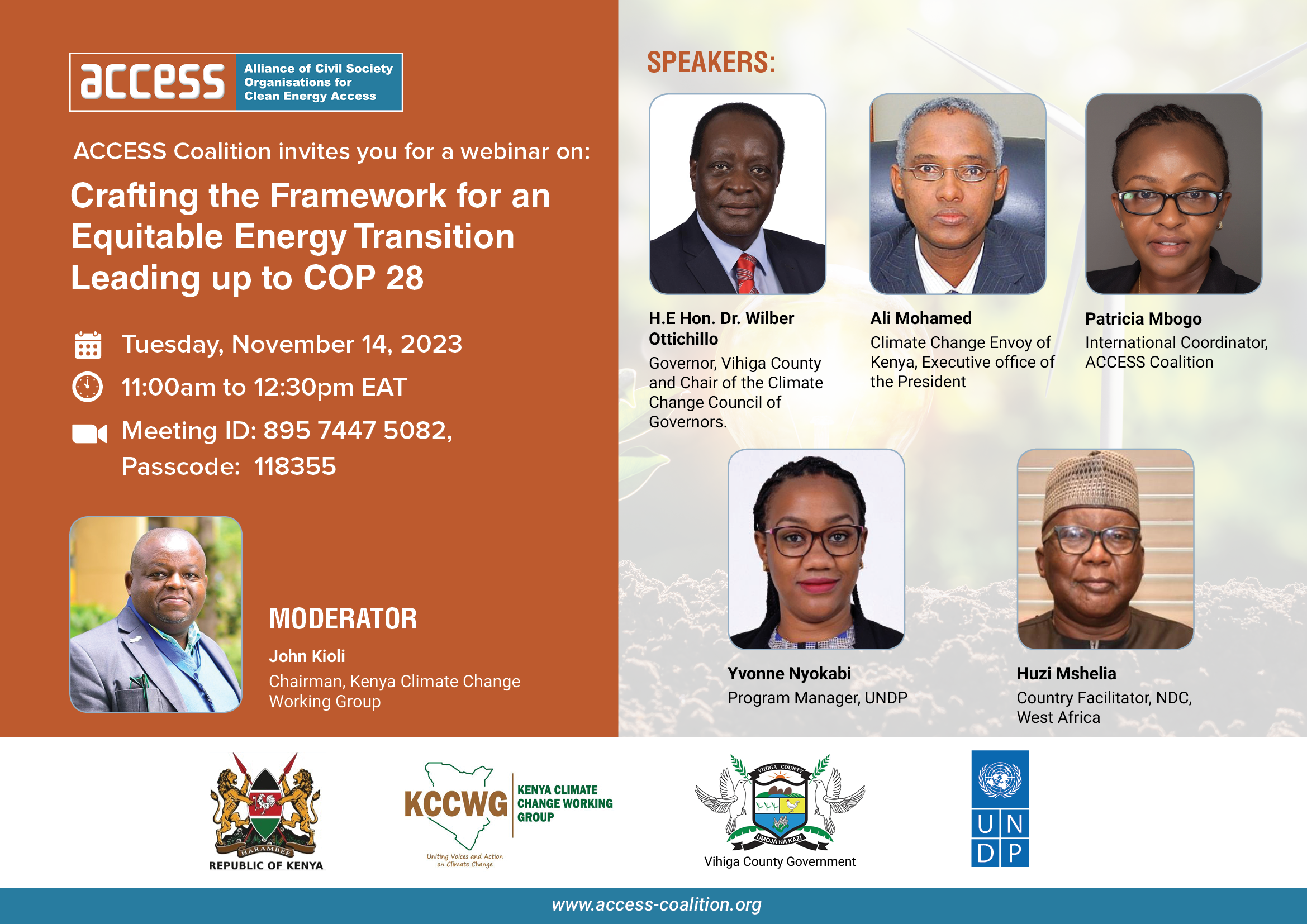
In the run up to COP28, ACCESS Coalition hosted a webinar on ‘crafting the framework for an equitable energy transition leading up to COP28’. The aim of the webinar was to unpack what just energy transition means in the context of COP 28 and how it aligns with global climate objectives.
The discussion delved into the crucial policies required for a fair energy transition, highlighting the pivotal role of Civil Society Organizations (CSOs) and development partners in championing climate justice and fostering clean energy access and a fair, just and equitable energy transition.
The session was moderated by John Kioli, the Chairman of the Kenya Climate Change Working Group (KCCWG), the East African node for ACCESS Coalition.
The speakers included; Patricia Mbogo, International Coordinator at ACCESS Coalition, Yvonne Nyokabi, Program Manager at UNDP, Huzi Mshelia, Nigeria Country Facilitator, NDC.
During his opening remarks, John underscored the significance of an equitable energy transition, highlighting the need to move away from traditional energy sources like fossil fuels to embrace renewable alternatives.
Emphasizing the urgency of this shift, he pointed out that any postponement would heighten the climate crisis and exacerbate social inequalities.
Patricia Mbogo, the International Coordinator of the ACCESS Coalition, emphasized the importance of inclusivity in the transition to renewable energy. She said resources acquired should serve to narrow the gap in underserved areas, extending beyond urban centers.
She added that prioritizing the accessibility of clean energy solutions across all regions remains a key focal point.
Dr. Wilber Ottichillo, Governor of Vihiga County and Chair of the Climate Change Council of Governors, stated the pivotal role of government entities in shaping an equitable energy transition. He emphasized that these entities contribute significantly by formulating policies that encourage the adoption of renewable energy.
“As a nation, we made a collective decision to establish a legal framework to address the challenges posed by climate change, a move championed by the Council of Governors. Our focus remains steadfast on navigating the transition from conventional energy systems to sustainable, renewable alternatives,” he remarked.
Yvonne Nyokabi, Program Manager at UNDP in her remarks, urged stakeholders to come up with partnerships to enable them to set up new business models and financial mechanisms that will enable upscale access to clean energy.
“Globally, UNDP have invested about 500 Million dollars as grants and we believe private sectors will invest in large scale to enable the disbursement of clean energy technologies. This will help communities’ transition into clean cooking easily,” she said. She further added that communities should be included in decision making processes as they are catalysts in enabling the transition.
During her concluding statement, Patricia Mbogo underscored, “equitable energy transition is firmly grounded in our collective commitment to environmental responsibility and social justice.”
The consensus emerging from the discussion was clear: community members hold the key to driving change. John Kioli emphasized the importance of sharing information on the myriad benefits of clean energy within communities.


Leave A Comment