


By Florence Gichoya
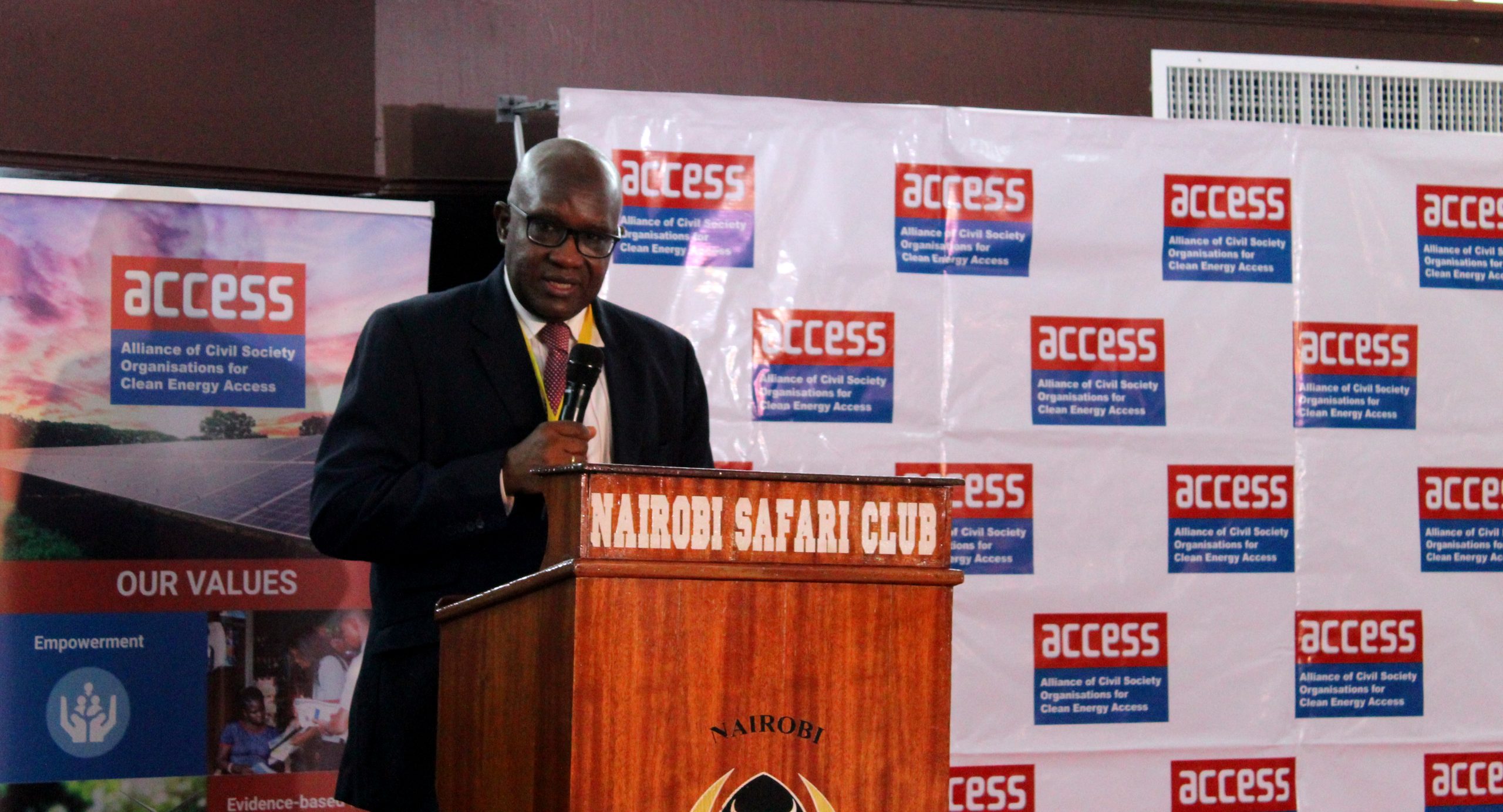
The African Development Bank (AfDB) Annual Meetings were held on May 27–31, 2024, in Nairobi, Kenya. ACCESS Coalition co-hosted a side event with the Kenya Climate Change Working Group (KCCWG) on May 29 at the Nairobi Safari Club Hotel. The side event session focused on ‘shaping the financing architecture for an equitable energy transition in Africa’ and had participants from civil society organizations (CSOs), African Development Bank officials, development partners, and the private sector.
Henry Paul Batchi Baldeh, AfDB’s Director for Power Systems Development, gave the keynote address on behalf of AfDB’s Vice President Kevin Kariuki. He emphasized the importance of the bank working with civil society organizations. “We value feedback from civil society organizations in the design and implementation of our projects,” he said. Baldeh reiterated the AfDB and the World Bank’s commitment to provide electricity access to 300 million Africans by 2030. He noted that electricity drives all the other sectors where women and youth, the largest demographics in Africa, play a key role.
Maria Mulindi, AfDB’s Director of Special Programmes, Office of the President, added the bank’s commitment to engaging with the CSOs who help the bank reach the grassroots communities. “All the sectors, including governments, CSOs, and the private sector, need to work together for the common good of the continent,” she said.
John Kioli, Chairman, KCCWG, noted that most African countries use biomass as an energy source. He called on the bank to commit to “timely consultation with the CSOs in the bank’s policies and programmes on energy.”
Patricia Mbogo, International Coordinator, ACCESS Coalition, speaking on behalf of the Secretariat, noted that there was insufficient energy finance flowing to and within Sub-Saharan Africa. This finance is not targeted at the most access-deficient countries and is predominantly in the form of loans, accounting for more than 70% of finance flowing to energy access in Africa (OCI,2022), adding to countries’ debt burdens. She stated the lack of a “sufficient flow of energy finance to solutions such as decentralized renewable energy (DRE) and clean cooking that can deliver access to most people living in energy poverty.” The persistent investment in fossil fuels undermines a just transition to renewable energy.
Representatives from the ACCESS Coalition’s regional nodes in West Africa and East Africa shared their advocacy work experiences. Ezekiel Chibeze from Strategic Youth Network for Development (SYND) Ghana underscored the need to ensure private sector investors in clean energy have access to finance to support the just energy transition agenda. Elizabeth Wanja, Coordinator (KCCWG), added that the node had achieved success in influencing different advocacy processes, such as energy plan development by the counties.
A high-level panel discussion was moderated by Zeynab Wandati, Climate and Science Editor (NTV Kenya). Amongst the speakers were Dr. Nqobizitha Dube, Consultant (Action 24 Zimbabwe), Jackie Kimeu, Energy and Climate Change Coordinator (WWF Kenya), Engineer Paul Kanja, Development Consultant, and Esther Wanza, Senior Officer in Charge of Energy, Environment, and Climate Change (Equity Group Foundation).
Dr. Dube recognized that the cost of the energy transition in Africa is hindered by the absence of innovative financing mechanisms. He said CSOs “need to advocate for different financing mechanisms that promote energy access and transitions in line with global commitments.”
Jackie emphasized the need to involve all stakeholders in the energy transition discussions and prioritize energy access on the continent. “Subsidies for fossil fuels need to be reinvested in energy access and renewable energy technologies, especially for off-grid communities,” she said.
Paul Kanja added that the financial architecture should be tied to the development of Africa. “75 percent of sub-Saharan Africans live in rural areas. A just energy transition should be driven by the aspirations of Africans and consider the rich renewable energy resources on the continent,” he said.
Esther Wanza remarked that there’s a need for more public awareness of the clean energy financing available for renewable energy solutions for end users, especially those living in off-grid areas.
Chikanne Ezeigbo, AfDB’s Civil Society Engagement Specialist, highlighted ways in which CSOs can engage with the AfDB, including during annual meetings, regional CSO forums, country open days, project consultation sessions, and direct outreach through the CSOs division office. “The voices of CSOs matter in the work of the AfDB. We continue to ensure that our projects are more people-centred and inclusive,” she said.
During the annual meetings, AfDB launched its 10-year strategy (2024-2033), which is anchored in the African Union’s 2063 agenda and the UN sustainable development goals.


Leave A Comment